Iannis Xenakis, Pithoprakta (1955 to 56)
An orchestral piece built from the physics of gases.
Explore Pithoprakta ↗Phase Transition · Edition 01
Final submissions close Friday, 6 November, 11:59pm IST
01 Art and research
Newton sorted light with glass in 1672. Olafur Eliasson turned related physics into an artwork. Aim the beam.
02 Inspiration
People have been carrying research into art for a long time. Notice what each one carries across, and what it leaves behind.
An orchestral piece built from the physics of gases.
Explore Pithoprakta ↗Weather and ocean data woven into sculptures that double as musical scores.
Explore Nathalie Miebach ↗Scientific data turned into moving image and sculpture.
Explore Semiconductor ↗Artworks generated entirely from mathematical equations.
Explore Hamid Naderi Yeganeh ↗The Dance Your Ph.D. contest asks researchers to explain their PhD through dance, a close cousin of what you'll be doing.
03 How it works
A question, a paper, or one of our starting points.
What did the research actually find?
Solo or as a team.
Make the work.
A translation thesis: about 200 words, a 2-minute voice note, or an annotated sketch.
A finding is water. The form you choose is the vessel. The fit is the whole game.
What someone was trying to understand.
What the research actually discovered.
How they found it out.
The messy middle, the dead ends, guesses and surprises.
What the research still can't explain, or missed.
Submitted as a link in the format for its category: Visual (images), Object (photos from several angles or short video), Sound (audio), Writing (text or PDF), or Moving image and code (video or interactive link).
200 to 500 words, a 2 to 4 minute voice note, or an annotated sketch.
04 Art under the surface
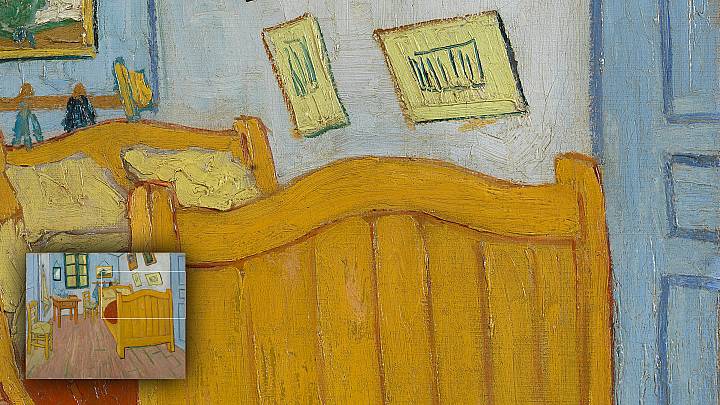
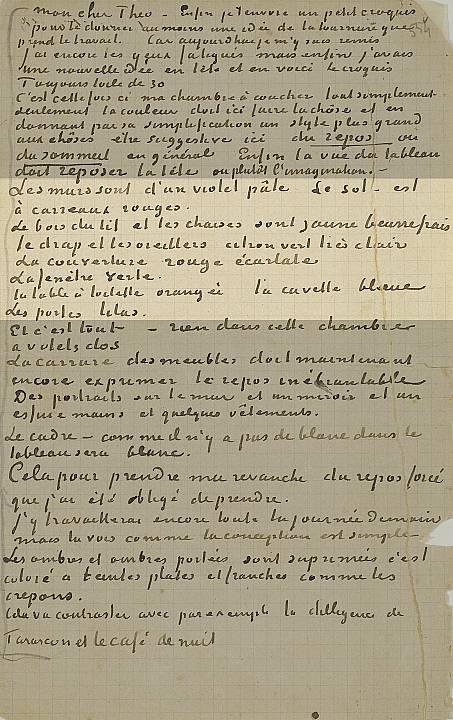
Are we seeing the colour he painted, or the colour time has left us?
Explore The Bedroom · Van Gogh Museum ↗06 Judging
Did you understand the finding, not just the topic?
Is something meaningful from the research present in the work?
Does the work function within the demands of its medium?
Researchers, artists, and practitioners reading every crossing.
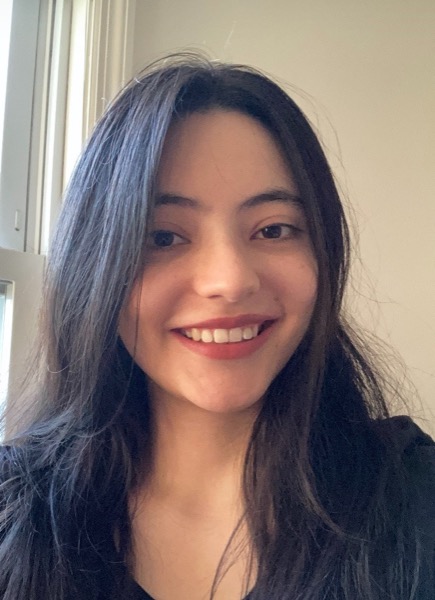
Silvana Alvarez Basto is an art historian, cultural manager, and translator. She served as coordinator of the Afro & Indigenous Futures project at the New School for Social Research and as Content Curator of Ilustre.co, the leading digital platform for culture in Latin America. She is also co-author of “Las colecciones de arte en la Universidad de los Andes” (Ediciones Uniandes, 2019), translator of the forthcoming Spanish edition of “Love as Human Freedom” (Stanford University Press, 2017), and Founding Member of the Latin Futures Association.
Question“What futures can we build when art imagines them?”
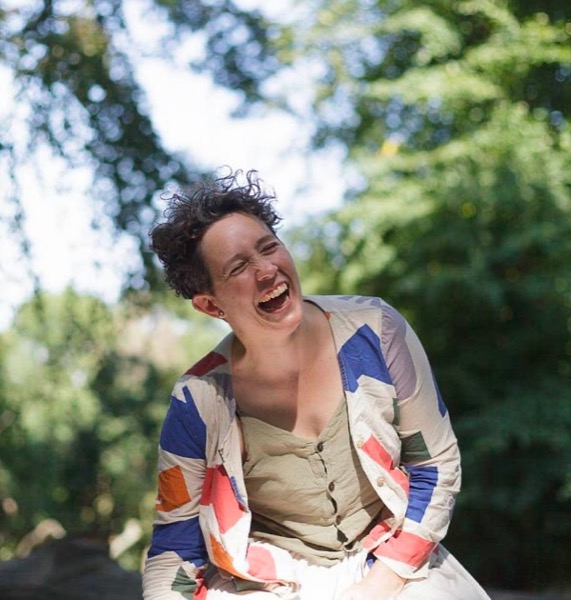
Interdisciplinary researcher and practitioner, integrating art and creative practice.
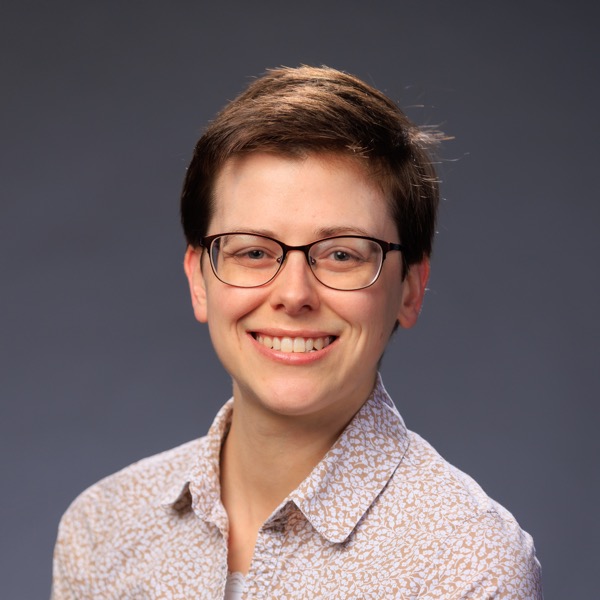
Systems at scale, from brains to teams to institutions.
Neuroscientist working at the intersection of open science, civic science and systems strategy, with a focus on how complex systems work across scales, from individual neurons to teams and institutions.
WorkA collaboration with an artist on a piece inspired by her research ↗
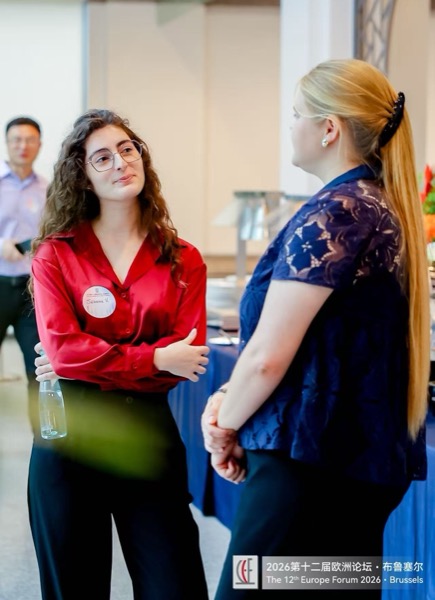
Jeanne Vincendeau is a researcher working on AI governance, international security, political violence and global governance, exploring how intelligent technologies shape political power. She is also an artist whose work is mostly analogue and ephemeral.
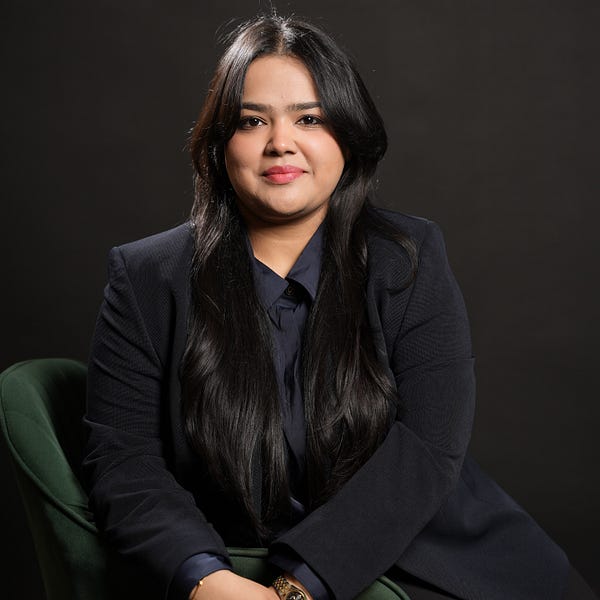
Vrinda Nair is a research scientist specialising in computational biophysics, with a focus on drug discovery, and a biotech engineer. She is Director of Operations and Growth at a maternal healthcare startup and a Research Assistant at Concordia University.
Question“What is lost each time a memory is reconsolidated, and could an artwork trap or preserve that loss?”
Work“To Be Forgotten with Age”, a poem about Alzheimer's disease ↗
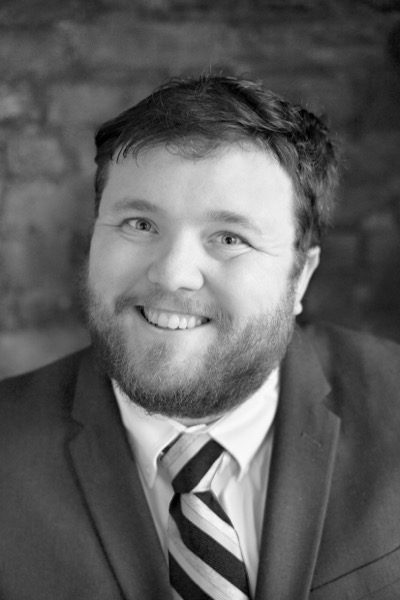
Phil Garber is an interdisciplinary artist who examines social systems, from the political to the inherent. Drawing on his lived experience as a disabled person who stutters, he interrogates and recontextualizes how we as people act in the world and relate to each other. Phil has previously shown at Haul Gallery, among other venues. He holds a BFA in Photography and Video from the School of Visual Arts, and an M.A. in International Affairs from The New School. Phil lives and works in Brooklyn, New York.
Question“How does your work advance your chosen research question? What concepts can we hold more easily as art or interpretation, rather than pure data and explanation?”
WorkProgrammatic Snowballing Effect (2026), from his solo show Rotten Beams Make Fertile Soil, Haul Gallery, 2026. Photo courtesy of Haul Gallery.
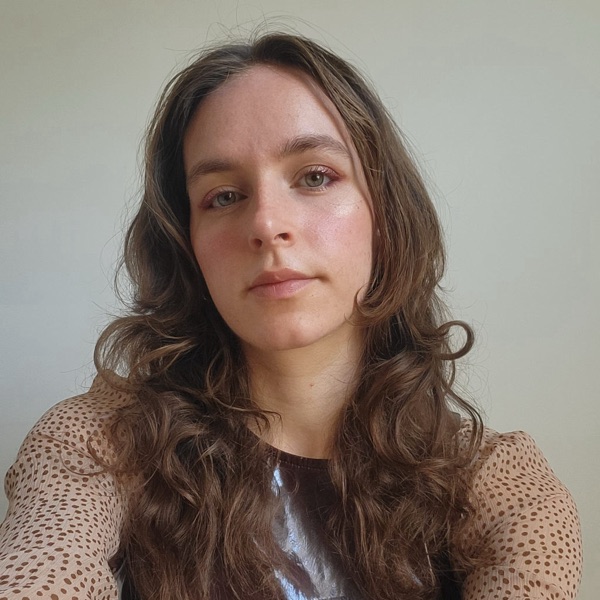
Fenne van Mierlo (NL) is a trend and futures researcher working across the domains of economy, philosophy, sociology, anthropology and the arts. Her inquiries are characterized by an artistic and embedded approach in which dialogue, experience and reflection through art are central. Within the research group ‘Transforming the Economy’, she researches what intimacy or care can mean within the economic sphere.
Work
Judge applications are now closed. If you bring a field or perspective our panel doesn't yet cover, email us at phasetransition.event@gmail.com and tell us what's new about your lens.
07 Recognition
Feedback from our judging panel, full of remarkable people working across research and art
A certificate signed by the panel
The option to be published in the Phase Transition archive, with your consent
Mentorship from researchers for strong submissions
Different kinds of brilliance deserve different recognition.
The strongest crossing overall
The most rigorous engagement with the source
The best work within its own form
A connection nobody predicted that still survives scrutiny
The most honest account of the process, failures included
The most interesting thing someone threw away, judged from process rather than the finished piece
Work that breaks the format in a way nobody saw coming
08 Timeline
11:59pm IST.
Announced soon after judging.
Deadline: Friday, 6 November, 11:59pm IST
Judge applications are now closed. If you bring a field or perspective our panel doesn't yet cover, email us at phasetransition.event@gmail.com and tell us what's new about your lens.
09 Mentors and partners
Phase Transition runs on people who give their time, knowledge and support. There are two ways to be part of it.
Mentors give participants an expert eye on work in progress, from the research behind a piece to the choices that carry it into art. Read the mentor guide to see what is involved.
Become a mentorPartners help Phase Transition reach more people and do more for its participants, through prizes, platforms, funding or community. If your organisation would like to back the competition, get in touch.
Partner with us10 FAQ
A free, remote, three-week competition where you take one research finding and translate it into an artwork, in any form. We judge the translation: whether something real from the research survives in the work.
Illustration shows what research is about, like a painting of neurons. Translation carries what it found, like rhythms that fall into sync the way neurons do. If the idea would vanish when you remove the caption, it's illustration.
Not quite like this, which is why there's no fixed format. The four thesis questions are prompts, not a template. It's your playground.
High school students, undergraduates, researchers and professionals, from anywhere in the world.
No. You need curiosity and one finding you find interesting. Our Starting Points Directory has questions with the research already summarised.
Yes. Just make sure a parent or guardian knows you're taking part.
Yes. Every member registers separately using the same team name, and you submit one final entry together.
No. Entry is free, and no paid materials or software are needed.
Friday, 6 November, 11:59pm IST. Judging begins on 8 November.
Roughly 6 to 15 hours over three weeks, depending on your form. Weekly checkpoints keep it manageable.
All deadlines are 11:59pm IST (UTC+5:30). Everything is remote and async, so you can work from anywhere.
You're not out. Checkpoints aren't scored. The kickoff is recorded and posted on Discord, so you can catch up and still submit.
Your artwork (as a link) and a translation thesis of 200 to 500 words, or a 2 to 4 minute voice note, or an annotated sketch. You can also add optional process notes.
Visual art, objects and sculpture, sound and music, writing, and moving image or code. Working in something else? Tell us during the event and we'll try to find a judge for it.
Yes, with disclosure. The thinking and translation must be yours. Don't submit fully AI-generated work or an AI-written thesis.
Your own research, yes. Previously made work, no. The piece should be made for Phase Transition.
You do, always. You choose private (judges and organisers only, never published), anonymous, or public in our archive.
Feedback from our judging panel, a certificate, the option to be published in our archive, a shot at seven awards, and mentorship from researchers for strong submissions.
Judge applications are closed. If you bring a field or perspective our panel doesn't yet cover, email us and tell us what's new about your lens.
Yes, through our Volunteer form.
Email phasetransition.event@gmail.com or ask in our Discord.
11 About
Researchers get called people who only calculate. Artists get called people who only decorate. I've never believed either.
The most interesting part of any idea is the middle, the stretch where it's still deciding what it is. In research, that middle gets thrown away the moment a paper is published. In art, it disappears into the finished piece. Phase Transition exists to keep it, and to bring together the people who live in it: the researcher who sketches in the margins, the artist who reads papers for fun.
I'm Samridhi, an undergraduate and independent researcher working across consciousness, AI and physics. I started Phase Transition because I wanted a place where taking research seriously and making art seriously weren't separate things, and where both get the respect they deserve.
This first edition is built by a small team of seven students and early-career researchers who volunteered their time because they believe in the same thing.
Questions or ideas? phasetransition.event@gmail.com